
Books to treasure?
Prize-givings and bookplates.

I'm a sucker for a literary biography so when I came across Jackie Wullschlager’s ‘Hans Christian Andersen – The Life of a Storyteller’ in Oxfam Books recently I couldn’t resist. I realised that I didn't actually know much about Andersen beyond the disastrous stay with Charles Dickens and his family, where Andersen hung around for five weeks and comprehensively outstayed his welcome, so I was looking forward to learning more. As I write this, I’m about 150 pages in and he does come across as rather self absorbed. Something else that quickly became apparent was that whilst some of the stories are crystal clear in my mind, I could only half remember others. So I dug out my childhood copy of Andersen’s Fairy Tales to read alongside the biography. I was particularly delighted to discover that it was illustrated by the wonderful Shirley Hughes.
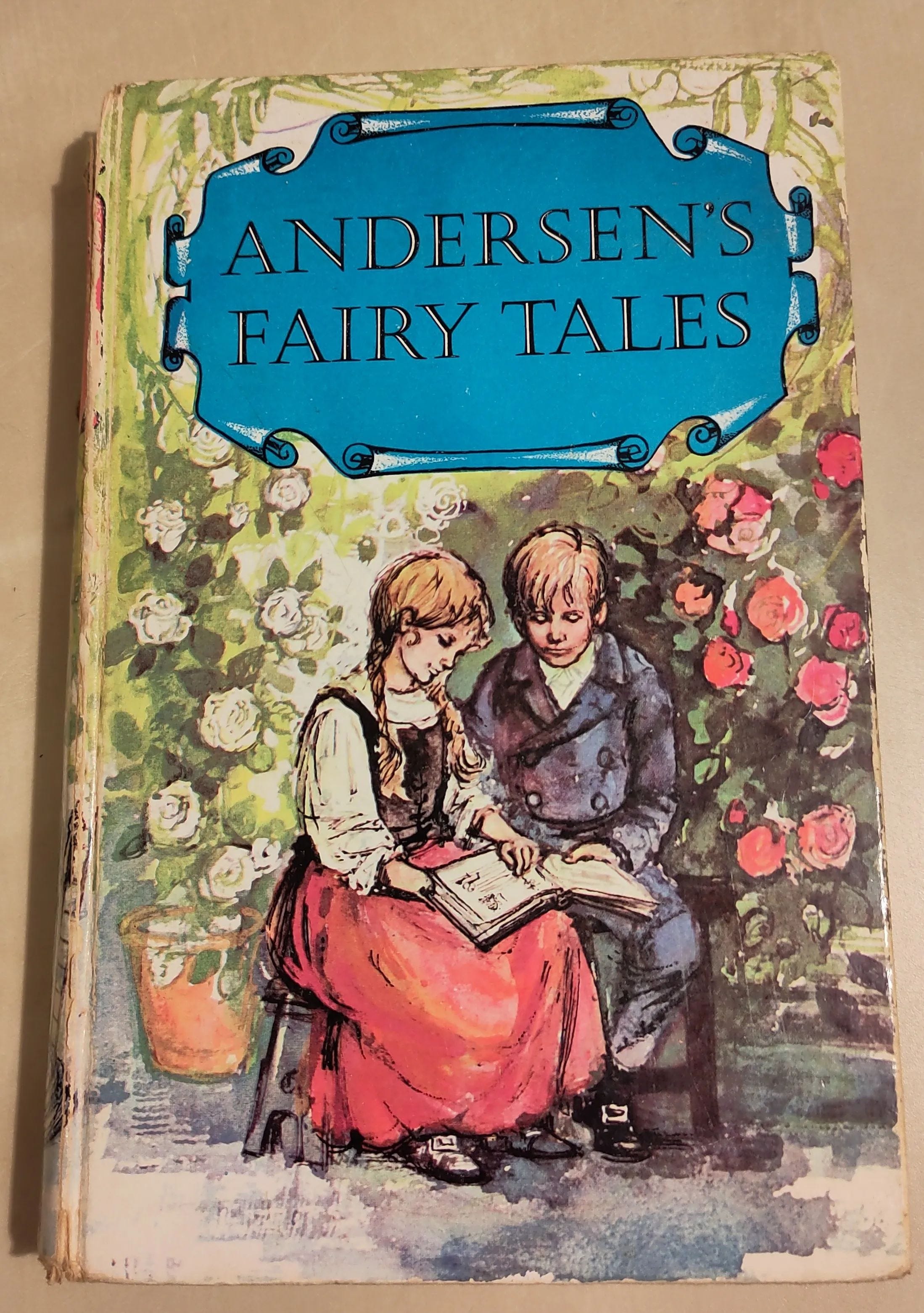
This copy was my aunt's before it came to me and was a Sunday School attendance prize. Seeing the award bookplate triggered one of those nostalgic memory rushes that come from being catapulted back in time unexpectedly.
I have a number of books that were her Sunday School prizes, a neat line of hardback children’s classics. In J.L. Carr’s ‘A Month in the Country’, set soon after the First World War, Kathy and Edgar are looking forward to receiving ‘The Coral Island’ and ‘Children of the New Forest’ as their prizes.
By the time I was receiving my own Sunday School attendance prizes (with very similar bookplates) they were in paperback editions but that wasn’t the most significant shift. The author that dominated my prize haul was Patricia St. John. St. John has been described as ‘one of the most prolific Protestant writers of the period’. She worked as a nurse during the Second World War and later as a missionary nurse overseas. Her books for children had explicitly Christian themes and titles including ‘The Tanglewood's Secret’, ‘The Mystery of Pheasant Cottage’ and ‘Rainbow Garden’ made it on to my shelves. I enjoyed these immensely at the time but they weren’t books that grew with me and I didn’t hang on to any of them. As I headed towards my teens there was a shift towards books by Madeleine L'Engle, an American writer whose books also reflected her Christian faith. However, L’Engle was one of those writers deemed not Christian enough for the more conservative and evangelical wings of the church in America, and far too Christian by some secular reviewers. She wrote in series and it was her Chronos books that I had, and about which if I’m honest, I sadly remember very little, probably because they are broadly speaking science fantasy, which wasn’t really my thing then or now.
Books as prizes also figured in my school life. I, being a terrible swot, won form prizes every year at Grammar School (by then not actually a Grammar School but a comprehensive, albeit one with delusions of grandeur).
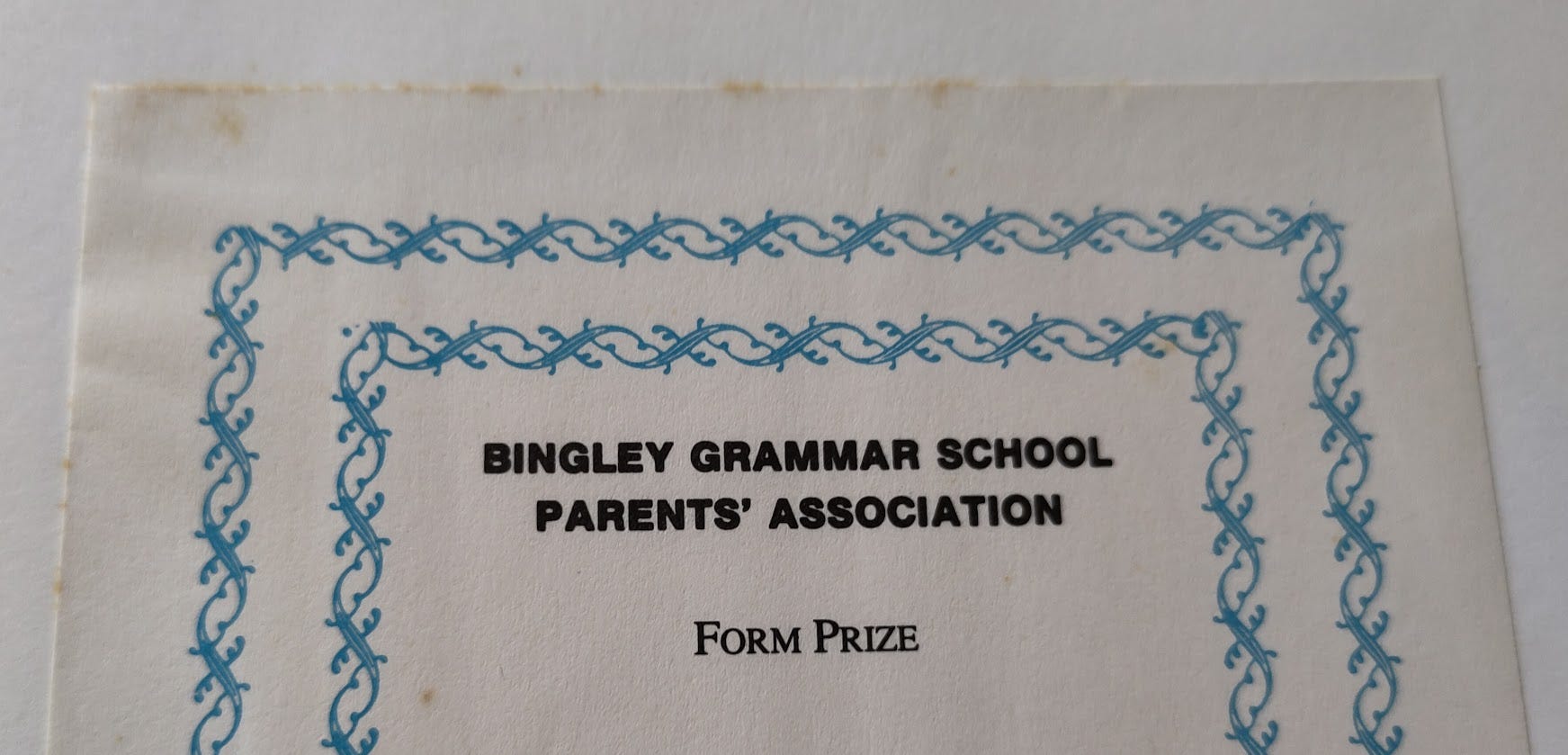
The best thing about these was that, unlike with the Sunday School prizes, we could actually choose them ourselves. Buy the book, present said book plus receipt to the Bursar's Office and get a fixed amount back – you could exceed the amount out of your own pocket but we were encouraged to stick as close to the prize value as possible, presumably to help create a level playing field. We’d then get the book back at the school Speech Day. By this point I had a serious reading habit to support and welcomed the chance to fill gaps in my collections and complete much loved series. Parental opinion tended towards choosing a special book of some kind rather than treating it as just an extra source of books. In Lucy Mangan’s excellent memoir of childhood reading ‘Bookworm’ she runs into the exactly the same opinion and I read that section of the book gasping in joyful recognition. (Actually, I read most of the book gasping in joyful recognition but that’s another story).
As it turns out, they were probably right. Of all my school prize choices, the book I most value, and still refer to, is ‘The Spirit of Britain: An Illustrated Guide to Literary Britain’ by Piers Dudgeon and Susan Hill.
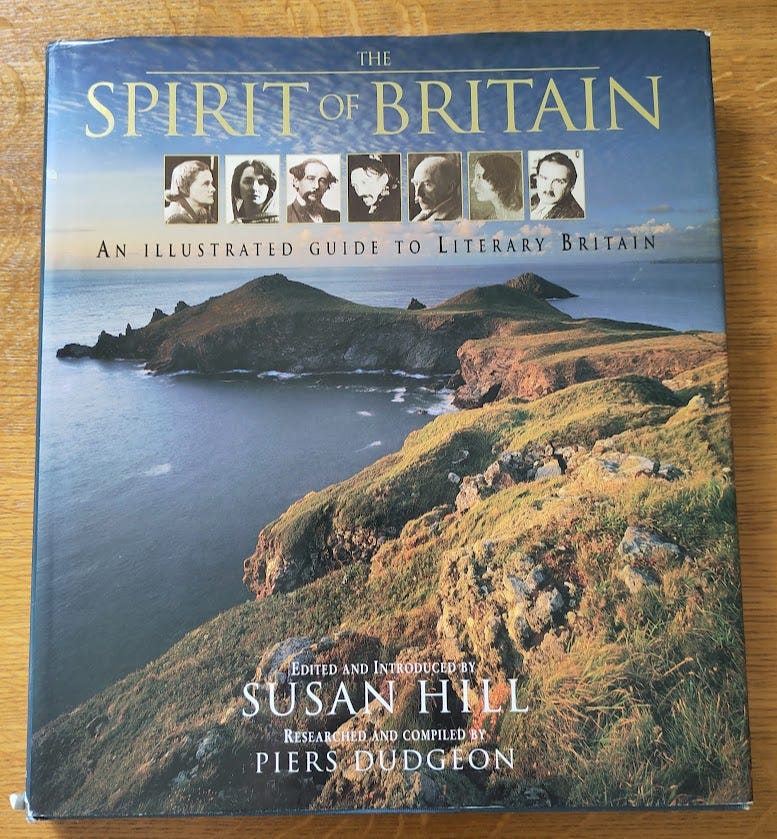
It’s a lovely book – full of photographs, extracts, biographical and literary background, and places to visit. I’ve remained interested in where books are set as well as the homes and gardens of writers ever since, and the prize opened up new authors to me, as well as giving me a list of places to visit.
What’s interesting to me looking back, is that I didn’t particularly treasure the books because they were prizes. They were kept or not kept, loved or not loved, on their merits alone. It's the stories that matter, in the end.
This made me feel so nostalgic, it's obviously the day for it! I was given a book of Shakespeare at a school prize giving when I was about 10. (Just looked it up, it was Favourite Tales from Shakespeare by Bernard Miles, illustrated by Victor G Ambrus - I loved those pictures!) And I'm fairly sure I was given the same advice about choosing something 'special'.
Reading your graceful essay is a lovely way to start my week. How powerfully our childhood reading experiences shape our view of learning for a lifetime! In my office at my college, my worn childhood copy of _Little Women_ faces me on the shelf across from my desk. It was a premium given with a coffee purchase of all things, and it was my mother’s favorite book. Her vitalized reading of it to me when I was three enchanted me & made me fall in love with reading. In addition, very soon in my childhood I knew I wanted to encourage others to have this type of transformative interaction in their own lives as an English teacher. Looking at this book reminds me why I teach as a calling—a particularly helpful reminder on frustrating days! As I prepare for the semester, I have created an assignment asking my introductory writing students to share their remembrances of their early reading experiences, including their favorite childhood book. It is a delightful way to get to know them & for the students to get to know each other to build a sense of community early in the class. Thanks for sharing this meaningful reflection!