
January 2026
A round-up of some of the things I’ve been writing, reading and doing this month.

My last round-up was before Christmas so this edition includes some of the things I got up to over the festive season as well as January.
Writing
This month saw me kick off my new Substack series: A brief history of Bedfordshire in plants and animals. The first post steps back into the deep past of 70 million years ago with coccoliths.

I’ve got a couple of new poems on the go that I’m currently trying to wrestle into shape and I’m doing some research for the historical novel I’m working on so creatively it’s been a pretty good month. I let this side of things slip a bit last year so I’m trying to be a bit more intentional about carving out time this year.
Reading
Discovering a new author is always exciting because their back catalogue opens up before you. I picked up The Enchanted April by Elizabeth von Arnim in a charity shop (mostly on the strength of it being a Virago title) and read it in a couple of sittings. It evokes the haziness of an escapist Italian holiday beautifully along with the effects of it on four very different women. I’m now looking forward to reading more of von Arnim’s work – yet another author to look for in second hand bookshops! Not technically a new author to me because I’ve read some of her other fiction, but I recently read Kate Atkinson’s Death at the Sign of the Rook which is the latest in her Jackson Brodie crime fiction series. I’m not sure how it’s taken me this long to pick one up but I’ll definitely be reading more.
I was given Upon a White Horse: Journeys in Ancient Britain and Ireland by Peter Ross for Christmas and thoroughly enjoyed it. It’s a fascinating book about stories, landscapes and culture. I particularly liked the way it weaved the archaeology with the responses that people have to ancient monuments and earthworks. I also loved Legenda: The Real Women Behind the Myths that Shaped Europe by Janina Ramírez which is an excellent history of the lives and afterlives of a handful of medieval women. Some of the attempts to map them on to 18th and 19th century women were more successful than others but overall this was a fascinating look at national identities through how women’s stories have been told.
Out and about: stories of childhood
A Boxing Day walk by the sea on the Suffolk coast was a chance to see the new Britten as Boy statue in Lowestoft. It’s a lovely piece of public art, rich in detailing and universal in its depiction of a small boy looking out to sea. It was certainly proving popular with people stopping to take a look, despite the bitingly cold wind, take photos and talk about it.
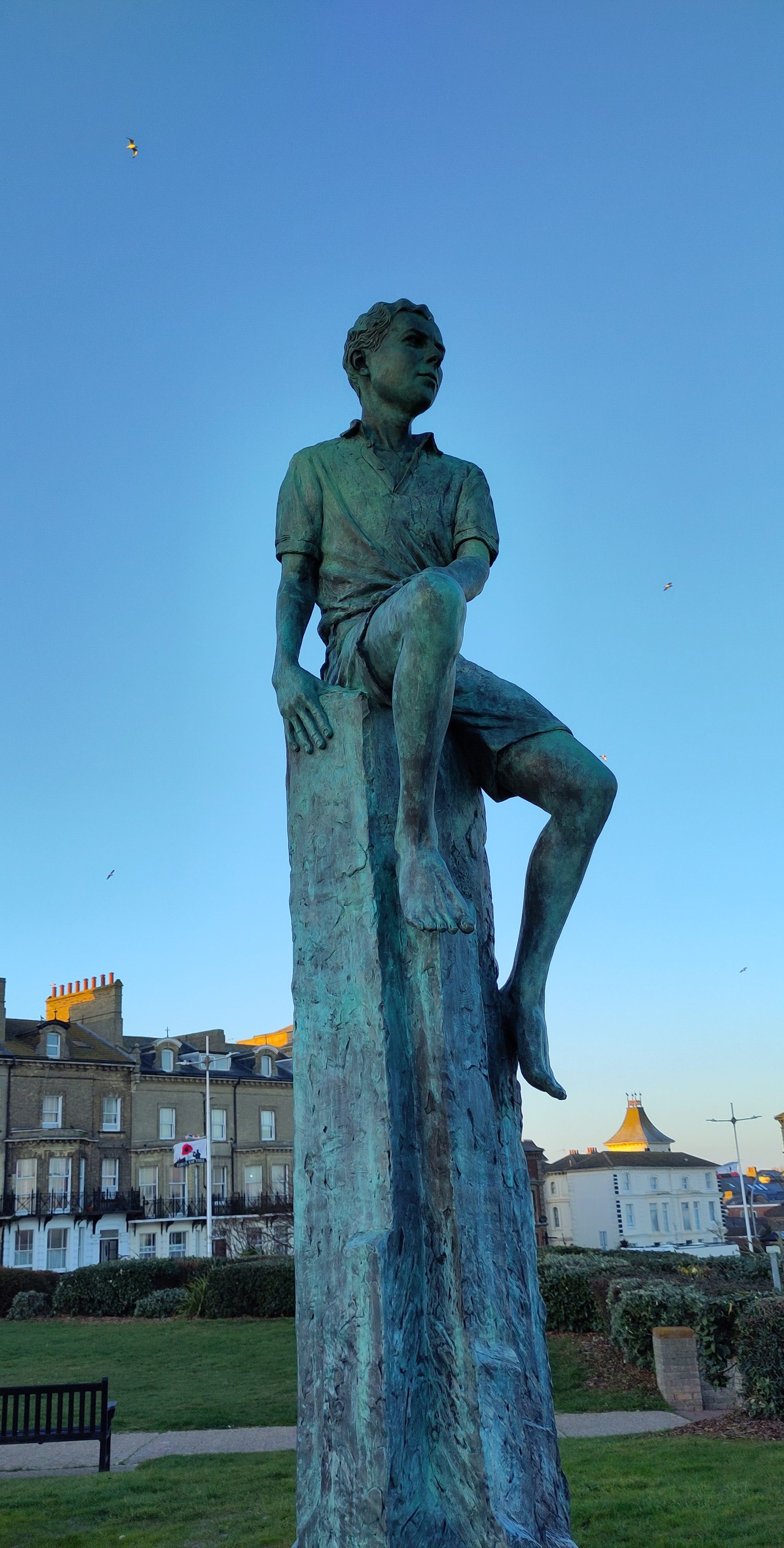
The project has given Lowestoft a tangible landmark to celebrate its connection with the composer. There’s an education pack with a walk which follows in his footsteps and explores the history of the town, including lots of information about the period when he lived there. There’s a particularly nice section on his toys which really brings his childhood to life. It shows the possibilities for making what might be of niche interest, a statue of a twentieth century composer, into a way of connecting with the story of the town and people’s own memories of childhood.
Back in Bedford, we visited the Noel Carrington: Nothing Need Be Ugly exhibition at The Higgins which celebrates the work of Noel Carrington who commissioned, edited and published children’s picture books including through the Puffin Picture Books series.
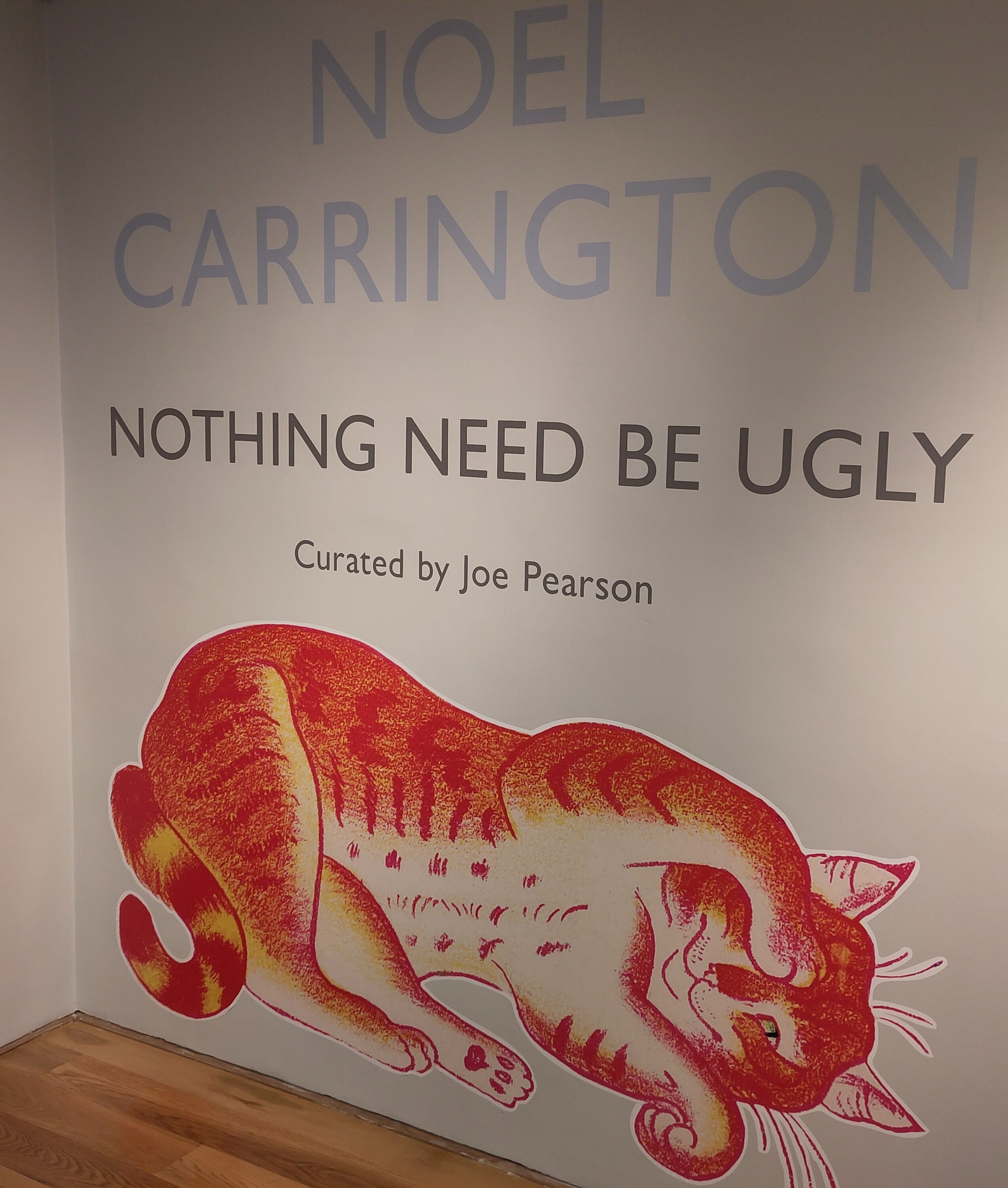
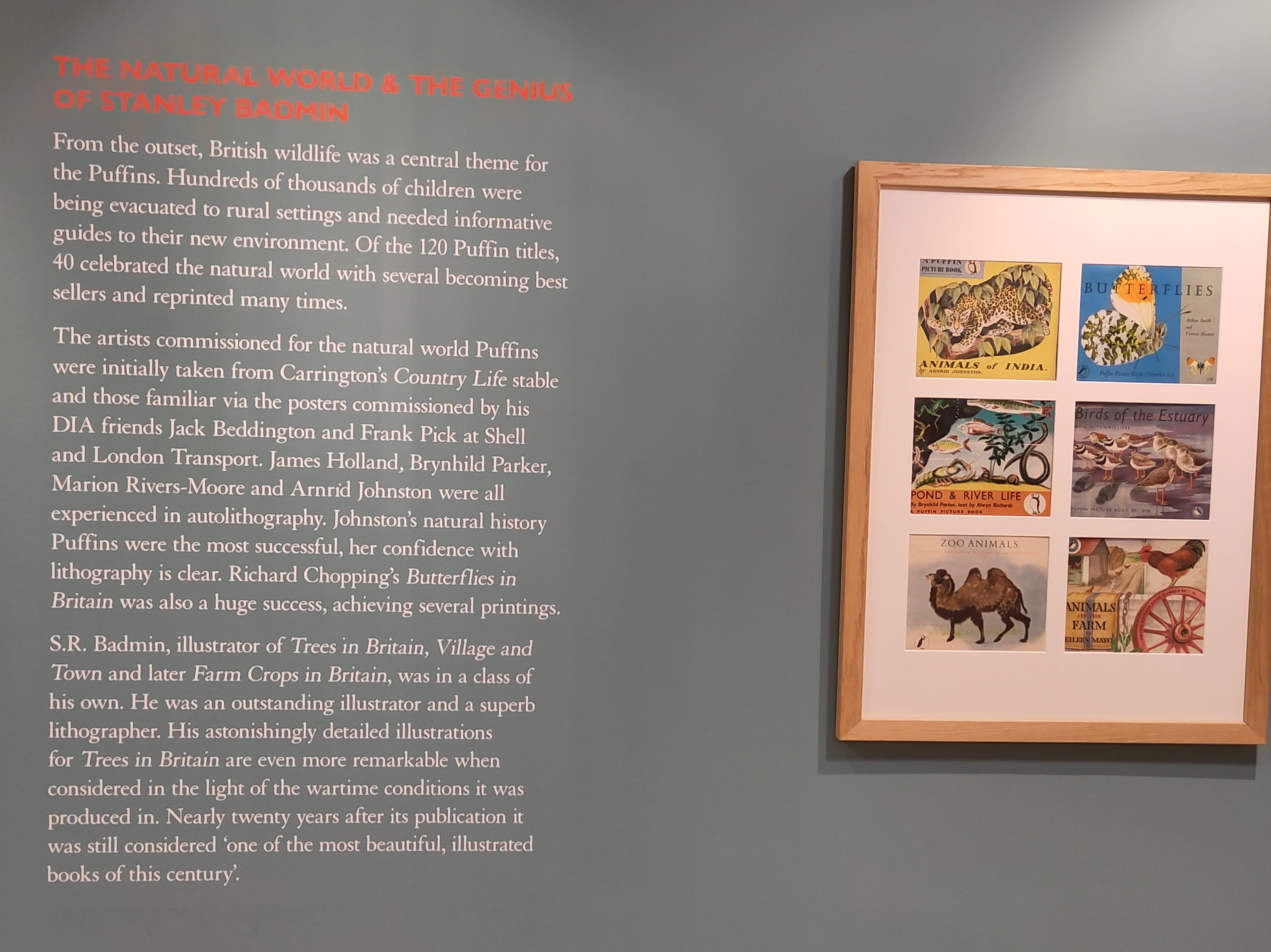
The exhibition included some lovely art work and I was struck by two of the interpretation boards in particular. One explained how British wildlife became a central theme for the Puffins ‘Hundreds of thousands of children were being evacuated to rural settings and needed informative guides to their new environment.’ The idea that urban children might benefit from books about nature, explained at their level, to help them adjust, seemed an unexpectedly thoughtful response to the disruption caused to children’s lives by the Second World War.
After the war was over Allen Lane, the founder of Penguin Books, wanted to turn the Puffin books into a purely educational series, Carrington argued against the decision:
I believe that children have learnt more about China from Lo Cheng than from any number of geography books, a lot about sailing from Arthur Ransome and more about ethics from the parables than the Sermon on the Mount.
Allen Lane ignored the plea but I loved Carrington’s championing of storytelling as a way of conveying knowledge.
Freelance diaries
Regular readers will probably know that as of January 1st I’m now fully freelance. I wasn’t expecting it to feel like a big deal as I’ve been gradually moving towards it for some time but there have been some surprises this month. The biggest of those was probably the impact of the psychological shift from my previous habit of talking about the salaried aspect first (even when it wasn’t the biggest part of my week) to leading on being freelance and having the confidence to say that’s what I do.
The freedom to organise the whole week on my own terms has been a really positive change but I surprised myself by discovering that Monday doesn’t work for as an admin day for me at all and I feel much better set up for the week ahead if I dive into some writing or project work first. Balancing the charity comms consultancy side of my work with the writing side has also been an interesting learning curve, both in terms of figuring out how I want the rhythm of my week to look and how much of each I’d like in an ideal world. I don’t think I’ve completely figured this out yet but I’m getting there.
The final surprise was that I’m better at setting boundaries than I thought I would be, saying no to work that doesn’t feel like a good fit and being clear about what services I do and don’t offer. I’ve also turned the email notifications on my phone off and don’t check them outside of working hours – which turns out to be a change I should have made years ago!
I love the way your round-up of reading, writing, and art shows that culture is a conversation across time — not just between people, but between past and present. When we revisit ancient stories, or celebrate public art, we’re doing something more than consuming culture: we’re weaving the texture of experience into lived life. That resonates with my reflection on how meaning emerges when we see time itself as a condition for depth, not just succession.
https://theeternalnowmm.substack.com/p/the-impossibility-of-an-eternal-universe?r=71z4jh